Pay in installments of $6.33 with
 ,
,
 and
and

Shipping Estimate
USA
- USA
- CAN
- USA
- CAN
Ships within 48 hours · Estimated delivery Jun 28 - Jul 3
 Promo Codes Available:
For Your Every Summer RSVP, with Code: SUMMER15
Description
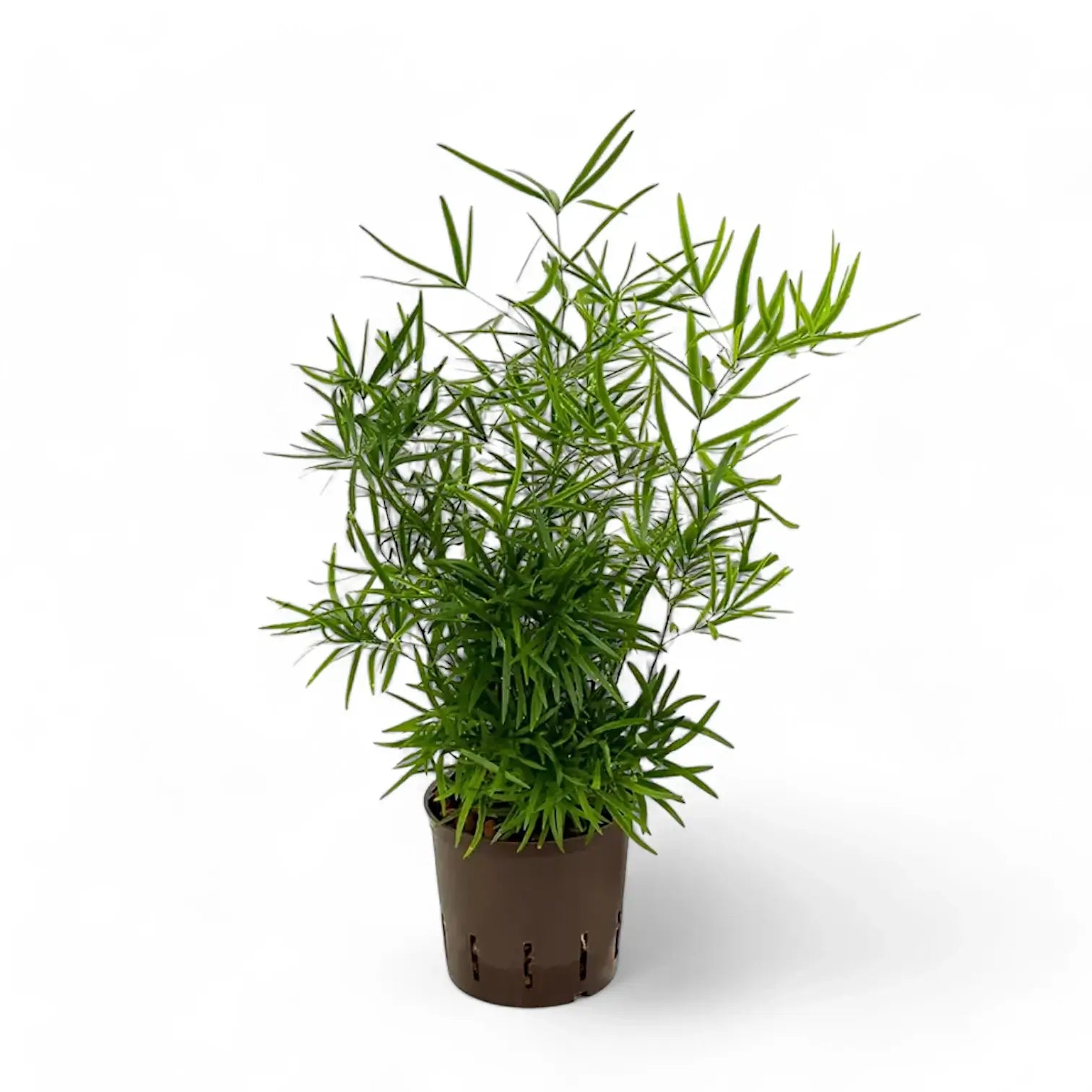
asparagus potted plant Asparagus falcatusAsparagus falcatus Asparagus falcatus is a vigorous climbing ornamental asparagus with long, woody stems, curved thorns and glossy, sickle shaped cladodes. It grows as a climbing perennial or shrub, using its hooked stems to move through surrounding vegetation in its native habitat. As a houseplant or conservatory plant, Asparagus falcatus can be trained upright because its stems lengthen strongly as the plant matures. The dark green cladodes are firm
Asparagus falcatus
Asparagus falcatus is a vigorous climbing ornamental asparagus with long, woody stems, curved thorns and glossy, sickle-shaped cladodes. It grows as a climbing perennial or shrub, using its hooked stems to move through surrounding vegetation in its native habitat.
As a houseplant or conservatory plant, Asparagus falcatus can be trained upright because its stems lengthen strongly as the plant matures. The dark green cladodes are firm and leaf-like, and can be guided onto a support or pruned as a contained specimen.
Key traits of Asparagus falcatus
- Growth habit: Climbing perennial or shrub with woody stems and recurved thorns.
- Cladode shape: Glossy, sickle-shaped green cladodes with a visible central vein.
- Root system: Forms swollen storage roots that help the plant manage variable moisture.
- Flowers and fruit: Mature plants can produce small fragrant white flowers followed by red berries.
- Training: Use a trellis, frame or regular pruning to guide the long stems.
Native range and climbing growth of Asparagus falcatus
Asparagus falcatus has a wide native range from parts of eastern and southern Africa through the Arabian Peninsula to India and Sri Lanka. It grows mainly in seasonally dry tropical regions, with records from forest margins and shaded woodland edges in southern Africa.
In nature, older stems become pale and woody, while the curved thorns help the plant grip surrounding growth. Indoors, that same climbing habit means the plant benefits from a clear growing direction. A young plant can look compact at first, then begin producing longer stems as the root system strengthens.
Care for Asparagus falcatus in a pot
- Light: Provide bright filtered light. Gentle direct sun early or late in the day is suitable after acclimation; strong midday sun can mark the cladodes.
- Watering: Water deeply, then let the upper part of the substrate dry. The swollen roots store water for short dry intervals, while constant wetness can damage the crown.
- Substrate: Use a well-drained mix with organic matter, bark or coarse mineral particles. The roots need both moisture and airflow.
- Support: Offer a trellis, stake or frame early. Tie stems loosely and guide new growth before it hardens.
- Temperature: Keep warm, ideally above 12 °C indoors. Growth slows in cool conditions.
- Humidity: Moderate indoor humidity is usually enough. Very dry air can make young tips crisp, especially near heat sources.
- Feeding: Feed lightly during active growth; excess fertiliser can push long, soft stems in low light.
- Pruning: Prune long or awkward stems back to a main stem or near the base. Use gloves because mature stems carry sharp thorns.
- Repotting: Repot when the roots fill the container or watering becomes difficult to manage. Choose a stable pot if the plant is trained vertically.
- Propagation: Propagation is usually by seed where available; established plants may also be divided carefully when the root mass allows it.
Problems to check on Asparagus falcatus
- Pale or yellowing cladodes: Check light, watering and root condition. A plant in very low light may produce weaker, thinner growth.
- Soft stems near the base: Inspect the crown and substrate. Reduce watering frequency and improve drainage if the root zone stays wet for too long.
- Dry brown tips: Look for irregular watering, hot dry air or root congestion. Adjust watering before removing affected stems.
- Uncontrolled climbing growth: Add support and prune early. Older woody stems are best shaped through clean cuts and new guided growth.
- Scratched leaves or nearby plants: Recurved thorns can catch on surrounding foliage, curtains or sleeves. Give the plant enough space around its support.
Train Asparagus falcatus as a climbing plant from the start. A trellis or frame separates the long stems; selective pruning controls tangled or thorny growth in a pot.
Asparagus falcatus toxicity and safety
Keep Asparagus falcatus away from children and pets, especially if berries form. The stems carry firm, recurved thorns that can scratch skin during handling, pruning or training. Wear gloves when working through older stems.
Asparagus falcatus etymology and botanical background
The accepted botanical name is Asparagus falcatus L., in the family Asparagaceae. The genus name Asparagus is linked to the ancient name for asparagus and emerging shoots. The species epithet falcatus means sickle-shaped, referring to the curved form of the cladodes. The species was first published by Linnaeus in Species Plantarum in 1753.
Shipping Notes
- Free Standard Shipping on $100+ Orders to the USA.
- Except Preorder products are shipped in 48 hours.
- Delivery to the USA:
- Standard Shipping : 3-10 business days
- If time is of the essence, please consider selecting expedited delivery for faster service.
Exchange/Return Notes
- We offer a 30-day return/exchange service after receiving.
- Final sale items are not eligible for returns or exchanges.
- To process your return/exchange, please contact us at [email protected]
- Please click here for more details>>> Return & Exchange Policy